
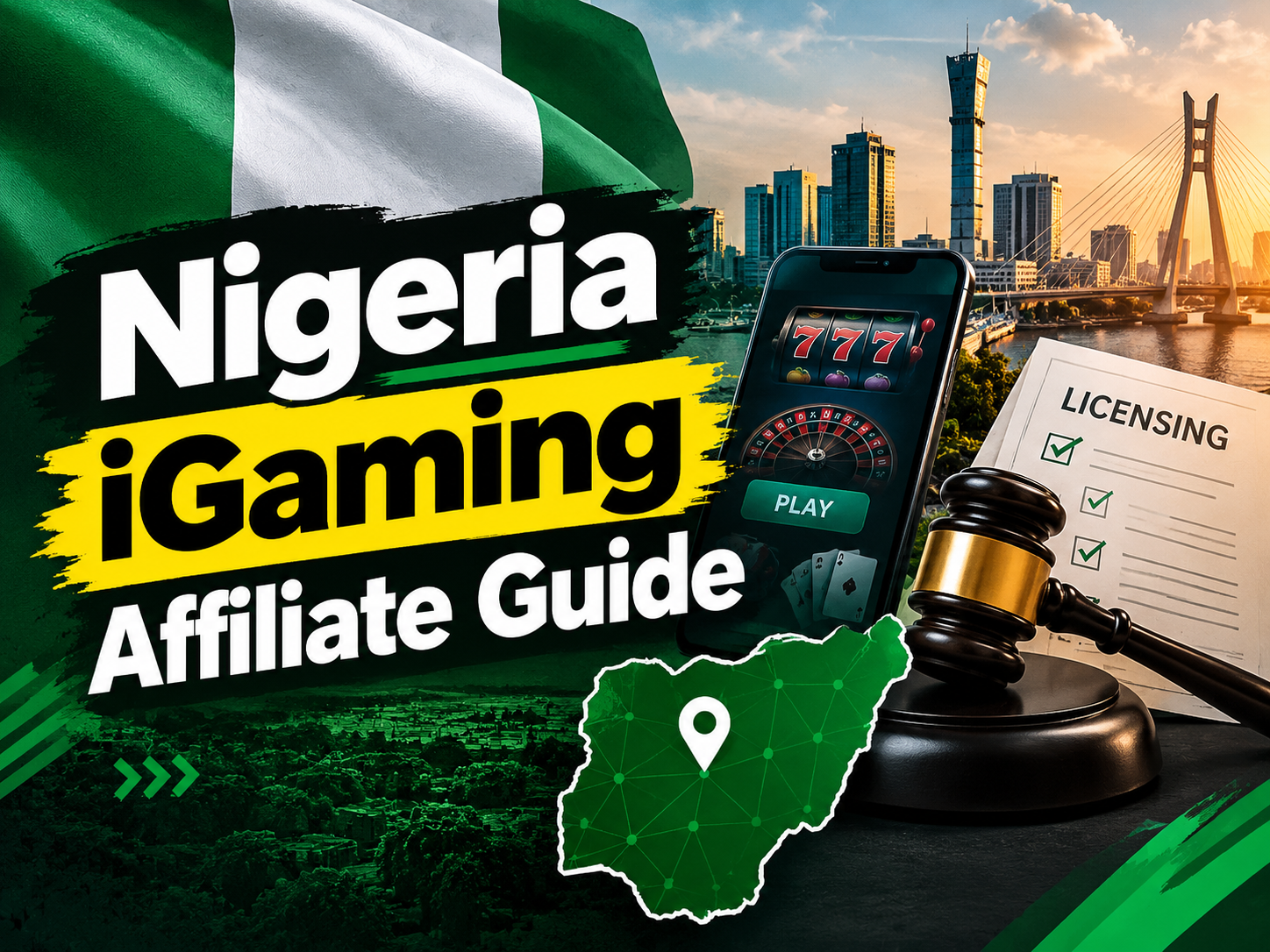
On 22 November 2024, a seven-member panel of Nigeria’s Supreme Court closed a sixteen-year legal fight in eleven paragraphs of holding. The National Lottery Act 2005 — the law that let a single federal regulator license gambling operators for the entire country — was voided outside the Federal Capital Territory. Lottery and gaming, the Court ruled, were never a federal matter to begin with. They belong to the states.
For an industry that had spent two decades operating under one national license, that ruling didn’t just change who signs the paperwork. It multiplied the paperwork by thirty-six. And it landed in the middle of Africa’s largest iGaming market — one growing faster than Kenya, Tanzania, or DR Congo, worth roughly $1.6 billion in gross win, and overwhelmingly built around a single product: football.
Eighteen months on, the dust hasn’t settled. States are still writing their own rules. A federal bill trying to claw back national jurisdiction is stalled in the National Assembly. And a coalition of states has built something close to a workaround — but “close to” is doing a lot of work in that sentence, and it’s the part that actually matters if you’re sending traffic here.
This guide is written for affiliates and media buyers deciding whether Nigeria belongs in a 2026 campaign plan, not for lawyers filing paperwork. It covers what changed, what the market actually looks like today, and the specific things you need to verify before you point a single click at a Nigerian offer.

Why Nigeria Is Worth the Regulatory Headache
Start with the numbers, because they explain why operators are willing to deal with thirty-six different regulators instead of walking away.
Nigeria is Africa’s largest gambling market by a clear margin — ahead of Tanzania, Kenya, and DR Congo — and it’s growing at more than 60% year-on-year, the fastest pace among the continent’s major markets. Gross gaming revenue sat around $1.6 billion in 2025, with sports betting accounting for roughly 75% of that figure. An estimated 60 million-plus Nigerians place bets, out of a population where 182 million active mobile subscriptions and 142 million internet users give the market real digital reach beyond Lagos and Abuja.
The demand side is remarkably concentrated in one direction: football. Betting activity tracks the European season almost exactly — it climbs through the Premier League and Champions League run-in, dips in the summer off-season, and spikes again when the new season kicks off in August. The 2025/26 season launch and Nigeria’s run to the AFCON semi-finals in December 2025 both produced measurable surges in market activity, which tells you most of what you need to know about creative angles and seasonal planning here: this is a football-first, mobile-first market, and casino product is a secondary layer on top of it, not the main event.
The supply side, though, is a duopoly. SportyBet and Bet9ja together hold roughly 73% of brand awareness/preference share, with Bet9ja alone estimated near 40% market share and a $750 million brand valuation. BetKing is the breakout story — up close to 300% year-on-year — and has pushed into third place. 1xBet and Betway round out the top tier, and the top four operators combined control around 70% of a market that officially has more than 100 licensed brands. That’s the affiliate opportunity in one sentence: enormous demand, extreme brand concentration at the top, and a long tail of operators fighting for the remaining 30%.

What the Supreme Court Actually Decided
The case was Attorney-General of Lagos State & Ors v. Attorney-General of the Federation & Ors (SC/1/2008) — Lagos State had been arguing this point since 2008. The Court’s reasoning had two parts. First, lottery and gaming aren’t listed among the 68 items on the Constitution’s Exclusive Legislative List, so the federal government never had exclusive authority to legislate on them. Second, the Court rejected the argument that gambling counts as “trade or commerce” under federal jurisdiction, holding that it’s inherently speculative and risk-based rather than an assured exchange of value. Both findings pointed the same direction: gambling regulation is a residual matter, meaning it defaults to the states.
The practical effect: the National Lottery Regulatory Commission (NLRC), which had licensed operators nationally since 2005, lost that authority everywhere except the Federal Capital Territory (Abuja). States that already had gaming laws on the books — Lagos, Rivers, Kano, Ogun, Oyo, Delta, Enugu, Ekiti, Abia, and Imo among them — simply continued operating under their own frameworks, now without federal overlap. States without existing laws had to start from zero. Osun passed its own Lotteries and Gaming Bill within days and stood up a state Lotteries and Gaming Board. Anambra has gaming bills moving through its legislature. Others are still catching up eighteen months later.
The National Assembly tried to legislate its way back into the picture with a proposed Central Gaming Bill, which reached a second reading before stalling. The Federation of State Gaming Regulators of Nigeria (FSGRN) formally objected, calling it “a repackaged version of the now-nullified National Lottery Act 2005,” and asking for its withdrawal. As of publication, the states have not ceded the ground back.

Three Licensing Paths — and Why “One License, All States” Isn’t Quite True
This is the part that actually determines whether an operator you’re promoting is legally allowed to advertise where your traffic lands. There are three routes into the Nigerian market, and they are not interchangeable.
1. The Universal Reciprocity Certificate (URC), via FSGRN. On 7 May 2025, member states of the FSGRN signed a Subnational Reciprocity Licensing Framework at a ceremony in Lagos, built in partnership with Deloitte and rolled out from 1 December 2024. The pitch is straightforward: one license, valid across every FSGRN member state, covering Online Sports Betting, Online Casino, Public Online Lottery, and Promotional Competitions. More than 20 states have joined so far. Operators who held NLRC licenses got a full waiver of 2025 fees to ease the transition, with renewals and the new fee schedule kicking in from 1 January 2026: a flat 11% GGR tax and a license fee fixed at ₦100 million (roughly $60,000–$65,000 at current rates) per category, per year — Lottery, Sports Betting, and Casino are billed separately. The FSGRN has held firm on the 11% rate, pointing out it’s still below the roughly 19% European average.
The URC is the closest thing to a national license Nigeria currently has. But it only covers member states — if a state hasn’t joined FSGRN’s framework, a URC doesn’t authorize activity there.
2. The NLRC’s Remote/Offshore Operator Permit (ROP), for the FCT only. With its national mandate gone, the NLRC repositioned around a narrower product: a five-year permit for foreign-based operators who already hold a license from a recognized international regulator. It costs $100,000 a year ($500,000 across the full term), carries a 4.5% duty on player deposits collected through the NLRC’s Sentinel monitoring system, and — notably for this audience — the permit’s own terms explicitly state that holders are allowed to “subscribe to affiliate programs.” That’s a rare case of a regulator naming affiliate marketing directly in its licensing conditions.
The catch: the ROP’s legal reach beyond the FCT is contested. It was built under the now-partially-voided National Lottery Act framework, and IMGL and other legal commentators note the question of whether an NLRC permit lets an operator lawfully advertise nationwide, or only within Abuja’s territory, remains legally unresolved.
3. Individual state licenses. An operator can also license directly with a single state authority — most commonly the Lagos State Lotteries and Gaming Authority (LSLGA), the most established and highest-volume state regulator, issuing separate licenses for Online Sports Betting, Online Casino, and Public Online Lottery on one-year terms at roughly $37,000. This route gives certainty in exactly one jurisdiction and nothing elsewhere. For an operator (or affiliate) only targeting Lagos-based traffic, it’s viable. For anything broader, it isn’t.

The open legal question sitting underneath all three routes is one IMGL has flagged directly: does a license from one state give an operator the right to advertise to players physically located in a different state? The FSGRN’s reciprocity framework is explicitly designed to answer “yes” for its member states — that’s the entire point of the URC — but for non-member states and for the NLRC’s ROP, the honest answer is that nobody has fully tested this in court yet. An operator that assumes nationwide reach from a single Lagos license is taking a legal position, not following settled law.
One more structural detail worth knowing before you evaluate an operator: Nigeria requires foreign-owned gaming businesses to maintain a minimum of 20% local ownership. That’s how several international brands have entered — Betsson, for example, took a 60% stake in the Lagos-licensed local sportsbook Betbonanza rather than launching a wholly-owned entity from scratch. It’s a due-diligence detail rather than an affiliate-facing rule, but it explains why so many “international” brands operating here are actually joint ventures with a Nigerian licensing partner, and it’s worth knowing when an operator’s corporate structure comes up in a program’s vetting questionnaire.
States Without a Framework Yet Are Not a Grey Zone by Default
It’s tempting to read “state-by-state” as meaning some states are open and others are closed, but that’s not quite what’s happening on the ground eighteen months after the ruling. A state without its own gaming law hasn’t legalized or banned anything new — it has simply lost the federal umbrella that used to cover it, and its regulatory position defaults to whatever pre-existing state legislation (often decades-old lottery or gaming-machine statutes) already said, layered under general criminal law. DLA Piper Africa’s Lagos-based gaming lead described the post-ruling landscape as “constitutionally seismic” but legislatively “uneven” — some states moved within days, others are still eighteen months behind. Practically, that means the safest default for any state outside the FSGRN’s ~20-plus member list, and outside the FCT, is to treat it as unverified rather than either open or closed, and to check the specific state’s current position before running geo-targeted campaigns into it. Lagos, Rivers, Kano, Ogun, Oyo, Delta, Enugu, Ekiti, Abia, and Imo are the states with the longest-standing frameworks and the clearest compliance answers; anywhere else warrants a direct check with the operator’s compliance team before launch.
Payments and Product: What Actually Moves the Funnel
Nigeria’s payment stack is unusually well-suited to affiliate-driven acquisition, mostly because it doesn’t depend on international cards.
Bank transfer via the NIBSS instant-payment rail is the dominant deposit and withdrawal method, typically settling same-day once KYC clears. USSD — dial-code payments that work on feature phones with zero data connection — remains commercially significant outside Lagos and Abuja, where 4G coverage is patchier. Mobile money wallets (OPay, PalmPay, Moniepoint) are growing fast and are frequently treated by sportsbooks as first-class payment rails rather than a fallback option. Paystack and Flutterwave, both CBN-licensed and NGN-native, sit behind most of these flows as the processing layer. The domestic Verve card works reliably with Nigerian-licensed operators but often fails outright on offshore-licensed platforms — worth flagging in any deposit-instructions content, since a card failure at the point of deposit is one of the more common reasons a first-time depositor abandons the funnel entirely.
Roughly 87% of gambling activity in Nigeria happens on mobile. A prelander or landing page built around desktop card-payment assumptions is optimizing for a segment that barely exists here. Anything you build — creative, prelander, deposit instructions — should assume mobile-first, bank-transfer-or-USSD-first, and football-first as the defaults, with casino product positioned as a secondary cross-sell rather than the headline offer.

Traffic Sources and Creative Angles That Actually Fit This Market
The operators themselves show where the volume is. SportyBet built its growth almost entirely on USSD-driven customer acquisition, reaching bettors on low-end phones with zero data cost — a channel most Western-market affiliates never have to think about, but one that maps directly onto push and SMS-adjacent traffic strategies here. Bet9ja’s retail shop network across Lagos, Abuja, and provincial cities still drives meaningful brand recognition that online creative can borrow from — “the operator you already see on the street corner” is a trust signal in a market where offshore brands are still building recognition.
Creative angles that track with actual demand: acca/combo-bet boosts (Bet9ja’s boosted-odds-for-5+-selections mechanic is a genuine differentiator worth reflecting in ad copy, not a generic bonus claim), live in-play betting during Premier League and Champions League windows, and Super Eagles / AFCON-tied campaigns timed to national-team fixtures — the December 2025 AFCON semi-final run produced a measurable spike in market-wide betting activity, and similar tournament windows are worth planning creative refreshes around rather than running static campaigns year-round. Crash games (Aviator-style multiplier products) have also become a meaningful secondary vertical layered on top of sports betting, particularly for creative targeting younger urban bettors who split time between sportsbook and casino product.
Local-language creative is underused relative to its likely impact — Nigeria has significant Hausa, Yoruba, and Igbo-speaking populations outside the anglophone urban centers where most affiliate content currently targets, and none of the major operators appear to be running meaningfully localized advertising into those language groups yet.
Advertising and Influencer Compliance: Where the Real Risk Sits for Affiliates
This is the section that matters most if your traffic includes any influencer or content-led component, and it’s where Nigeria has started tightening faster than its licensing framework has.
There is no single national gambling advertising code — because the same Supreme Court ruling that fragmented licensing also fragmented advertising standards, which are set at state level, led by the Lagos State Lotteries and Gaming Authority. On top of that patchwork, general Nigerian consumer-protection and advertising law still applies regardless of which state a bettor sits in:
- FCCPA Section 126 prohibits false, misleading, or deceptive endorsements, including undisclosed sponsorships and unauthorized testimonials — this applies to influencer content generally, gambling included.
- ARCON (the Advertising Regulatory Council of Nigeria) sets broader compliance standards for digital marketing and influencer disclosure that operate independently of gambling-specific rules.
- The Nigeria Data Protection Act applies to any giveaway, referral program, or lead-capture flow that collects player data — a detail that catches affiliates running email or WhatsApp opt-ins off guard.
- FIRS treats affiliate and influencer income as taxable, regardless of whether it arrives via affiliate link, brand deal, or referral commission.
Industry self-policing is also visibly tightening in 2026. At a Gamble Alert symposium in Lagos this year, Bet9ja’s own Head of Legal and Compliance publicly warned about “manipulative advertising” patterns among influencers promoting operators — specifically flagging content that prompts punters to bet because “someone won a certain large amount” as the kind of framing regulators and operators are now watching for. When an operator’s own compliance team is publicly cautioning its affiliate and influencer channel, that’s a signal worth taking seriously rather than a one-off news item.
Layer on top of that the platform-side rules that apply everywhere, not just Nigeria: Meta now requires gambling advertisers to declare their role (operator, aggregator, affiliate, or agent), submit valid licenses, and identify gambling activity type before ad accounts are approved — with manual review and no guaranteed turnaround. Twitch has restricted affiliate links and referral codes in gambling streams in several regions and enforces age-gating on gambling-content channels. None of this is Nigeria-specific, but it stacks directly on top of the local rules above, and it’s the layer that actually gets accounts suspended fastest.
What Promoters Actually Need to Check
Before sending a single click to a Nigerian iGaming offer, verify these five things — in this order:

1. Which license the operator actually holds, and where it’s valid. Ask directly: URC (and which FSGRN member states it covers), NLRC ROP (FCT-only, legally contested beyond it), or a single state license (Lagos LSLGA is the most common). “Licensed in Nigeria” without a specific answer to this question is not a verifiable claim — get the license number and cross-check it against the relevant regulator’s public register where one exists.
2. Where your traffic geography actually sits relative to that license. A campaign targeting Lagos-based traffic against a Lagos LSLGA-only license is fine. The same campaign run nationally, or targeting a non-FSGRN state, is running on an unresolved legal question — not a settled compliance basis.
3. Whether the operator’s payment stack matches how Nigerians actually pay. Confirm bank transfer via NIBSS, USSD support, and at least one of OPay/PalmPay/Moniepoint are live and functioning — not just listed. A broken or slow deposit rail is the single most common reason a well-targeted campaign underperforms on conversion despite strong click-through.
4. What the operator’s own affiliate terms say about creative and disclosure requirements. Given how visibly operators like Bet9ja are now policing influencer messaging publicly, assume your program’s compliance team will be stricter in 2026 than the contract language suggests, and get platform-specific ad approval documentation (particularly for Meta) before building a campaign around an operator that hasn’t been pre-vetted on that platform.
5. Whether your content or creative collects any player data. If a giveaway, referral flow, or lead form is involved, confirm it has a legitimate data-processing basis under the Nigeria Data Protection Act before it goes live — this is a compliance gap that’s easy to miss because it sits outside gambling-specific law entirely.
The Honest Read
Nigeria in 2026 is a market with real, durable demand — a young, mobile-first population, a football culture that drives predictable seasonal traffic, and payment rails built for exactly the kind of frictionless mobile deposit flow that affiliate funnels depend on. It is not, yet, a market with a settled compliance answer. The FSGRN’s reciprocity framework is the most promising development in the space — a genuine multi-state coordination effort that’s actually gaining members — but it covers a subset of states, not all thirty-six, and the legal question of cross-state advertising reach outside that framework remains open.
That combination — strong fundamentals, fragmented and still-evolving regulation — is exactly the environment where verifying the license before the campaign, not after a chargeback or an account suspension, is the difference between a durable Nigerian traffic stream and a short one.
This guide reflects the regulatory landscape as of September 2026. State-level licensing frameworks, FSGRN membership, and platform advertising policies change frequently — verify current status directly with the relevant state regulator or the FSGRN secretariat before committing spend.
FAQ
Is iGaming legal in Nigeria in 2026?
Yes, but the regulatory framework is fragmented. Following the Supreme Court’s November 2024 ruling, gambling regulation generally falls under the states rather than the federal government, with the Federal Capital Territory remaining under the NLRC’s jurisdiction. Operators therefore need to establish exactly which state or states their license covers.
Can an operator with one Nigerian license operate nationwide?
Not necessarily. A license issued by an individual state generally provides certainty only within that jurisdiction. The FSGRN’s Universal Reciprocity Certificate is designed to provide multi-state coverage across participating member states, but it does not automatically cover states outside the framework. The NLRC’s Remote/Offshore Operator Permit is primarily relevant to the FCT, and its nationwide reach remains legally contested.
What is the Universal Reciprocity Certificate (URC)?
The URC is a multi-state licensing framework established through the Federation of State Gaming Regulators of Nigeria (FSGRN). It is currently the closest equivalent to a national gaming license and is intended to allow operators to operate across participating FSGRN member states. It does not automatically authorize activity in states that have not joined the framework.
Do affiliates need their own gambling license in Nigeria?
The article does not identify a separate nationwide affiliate licensing requirement. However, affiliates are still affected by the operator’s licensing scope, state-level advertising rules, consumer-protection requirements, data-protection law, and the affiliate program’s own terms. Before launching a campaign, affiliates should confirm with the operator’s compliance team where the offer can legally be promoted.
Can affiliates promote offshore operators to Nigerian players?
This depends on the operator’s licensing position and the geography being targeted. The NLRC’s Remote/Offshore Operator Permit explicitly allows permit holders to participate in affiliate programs, but the legal reach of that permit outside the FCT remains unresolved. Affiliates should therefore avoid assuming that an offshore operator’s Nigerian permit automatically authorizes nationwide traffic.
What payment methods should a Nigerian iGaming affiliate look for?
Bank transfers through Nigeria’s NIBSS instant-payment infrastructure, USSD, and local mobile-money wallets such as OPay, PalmPay, and Moniepoint are particularly important. Nigerian-licensed operators may also support Verve cards. Affiliates should verify that the payment methods are actually operational rather than relying solely on an operator’s payment-page claims.
Is Nigeria a mobile-first iGaming market?
Yes. The article estimates that roughly 87% of gambling activity takes place on mobile. For affiliates, this means landing pages, prelanders, deposit instructions, and creative should be designed primarily for mobile users, with bank transfer and USSD considered core payment flows.
What sports betting content works best in Nigeria?
Football is the dominant demand driver, particularly the Premier League and Champions League. Accumulator and combo-bet promotions, live betting, and campaigns connected to the Nigerian national team and major tournaments are particularly relevant angles. Crash games such as Aviator-style multiplier products are also an important secondary vertical.
What should affiliates verify before promoting a Nigerian betting offer?
At minimum, verify five things: the operator’s exact license and geographic coverage, whether the target traffic comes from a covered jurisdiction, whether Nigerian payment methods work correctly, what the affiliate program requires for advertising and disclosures, and whether any lead-generation or giveaway flow complies with Nigeria’s data-protection requirements.
Are gambling advertising rules the same across Nigeria?
No. Advertising requirements are affected by the state-level regulatory structure, while broader Nigerian consumer-protection, advertising, and data-protection laws can apply regardless of the gambling license involved. Platform rules from services such as Meta and Twitch add another layer of compliance for affiliates using paid or influencer traffic.

Leave a Reply